
You're Scaring The Hoes ...
Because God forbid you mean it.

Are You Scaring the Hoes?
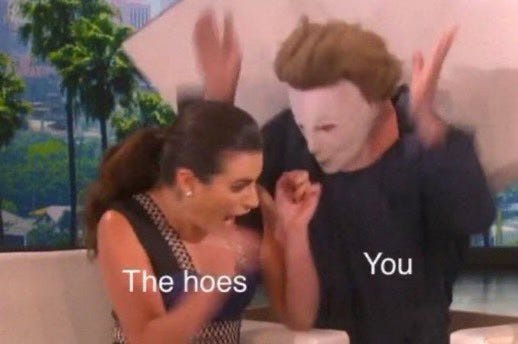
I’ve had my scaring the hoes moments.
The times I said too much too fast and watched the air change. The laugh that came a second too late. The silence that followed sincerity.
I’d try to walk it back, make it sound more chill, more clever, and ultimately less revealing. Sometimes I’d rewrite the moment in my head, imagining the cooler version of me who said less, who played it better.
That’s what this whole thing is, isn’t it? A quiet performance of control.
We’ve learned to flatten our feelings until they look manageable. We call it maturity, but it’s mostly fear of being too much, too eager, too alive in a world that rewards composure over clarity.
You’re scaring the hoes isn’t just a phrase. It’s a boundary. It’s the line between feeling and presentation.
Dada Walked So the Algorithm Could Run
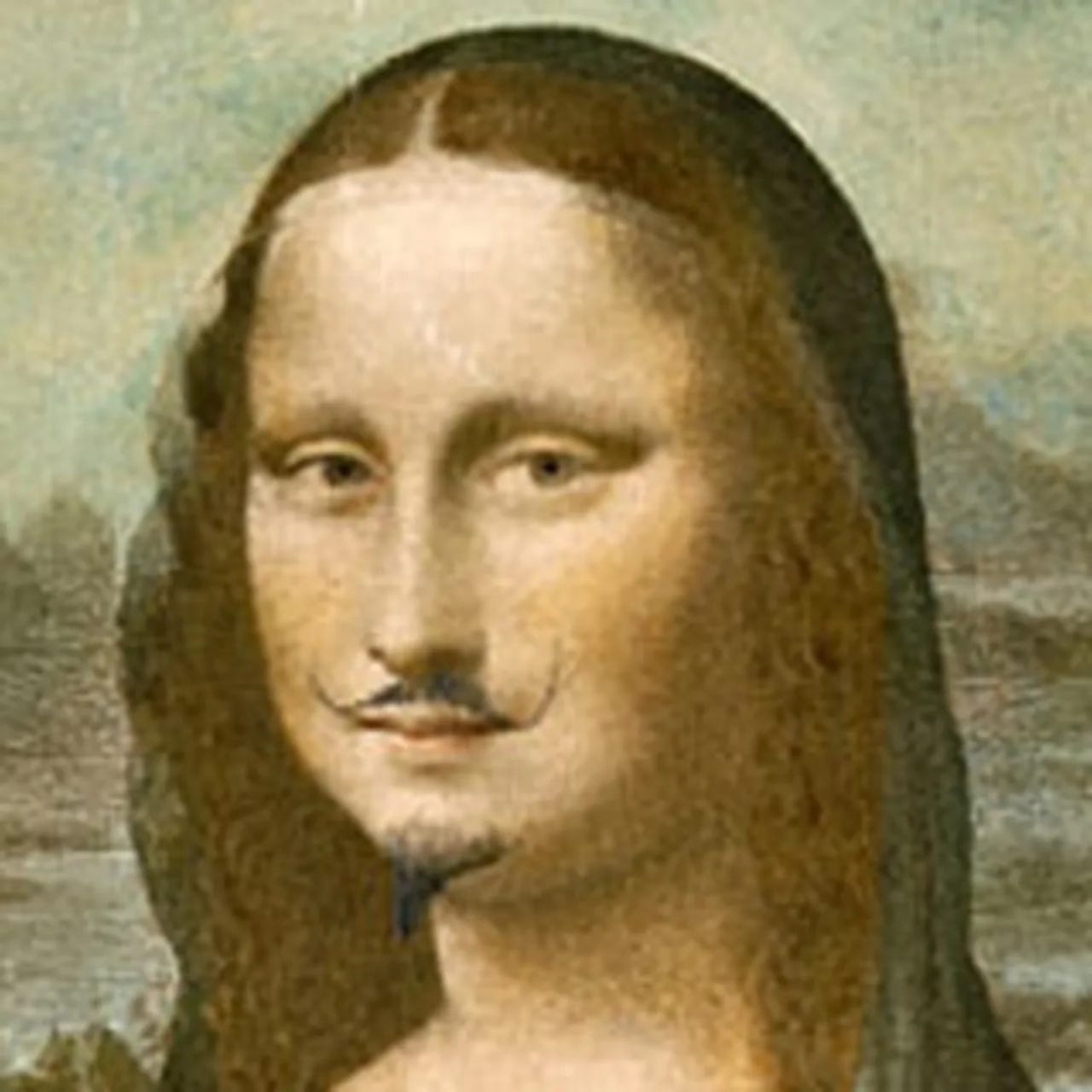
In 1916, while Europe tore itself apart, a few artists gathered in Zurich to build something out of the wreckage. Hugo Ball, Tristan Tzara, and Emmy Hennings, people who had seen reason lose its credibility. The movement wasn’t born from rebellion as much as exhaustion. Logic had justified too much killing; structure had become propaganda. Dada’s chaos was clarity.
Their art made no sense because sense had become a lie. They read poems that collapsed into sound. They built collages from broken headlines. They performed nonsense with the seriousness of prayer.
What they were really saying was: meaning has failed us.
Half a century later, Allan Kaprow picked up that same tension and called it The Happening.
He treated life itself as the medium > no audience, no stage, just an event. A happening was planned but unrehearsed, deliberate but unstable. It lived somewhere between performance and accident, where presence could still be felt before self-consciousness caught up.
Something is haunting in that idea. The desire to experience life without preconceptions and to be spontaneous before the camera starts recording.
But every era has its lens. Dada needed absurdity to feel alive again. Kaprow needed participation, and this one ( this era of infinite documentation ) needs composure.
The same rawness Dada sought to expose now feels like indecency. Unedited presence reads as a disruption.
That’s the quiet link between The Happening and “scaring the hoes.”
Both describe the moment when expression crosses an invisible line, when feeling breaches performance.
In Zurich, that rupture was art. In the gallery, it was an experiment. In conversation, it’s awkwardness.
It’s the same flinch in a new room: a reminder that the real thing still carries danger.
Kaprow once said that art should be experienced as “the happening of life itself.”
Maybe that’s all “scaring the hoes” really is: a small, accidental happening. The instant someone forgets to perform, and everyone else remembers they are.
The Performance of Not Performing
Let’s be real; we all perform.
Even when we insist that we are being real, there is choreography in the confession. The camera no longer needs to exist; it has been internalized. The gaze has moved inward. We edit ourselves in real time, monitoring tone, posture, and timing—all the tiny calibrations that keep us believable.
Performance has become the key to staying safe. The world still rewards composure over honesty, so we rehearse neutrality until it looks like depth. We learn to flatten our emotions, to soften our reactions, to make our desires appear casual. We call it confidence, but it is surveillance — self-surveillance disguised as self-control.
This summer, the phrase “performative male” drifted across timelines, half joke, half diagnosis. It is named the posture everyone could recognize: men who perform stoicism so hard that it collapses into theater. The still face. The monotone voice. The curated detachment that appears mysterious but is actually a form of management.
You know the uniform. Wide trousers that billow with intent. Matcha in a glass cup, held too casually. A tote bag with bell hooks inside ( the spine obvious), keys dangling against the canvas as punctuation. Every detail softens the performance without ever breaking it. It is vulnerability rendered in lifestyle aesthetics: tender, but rehearsed.
Then came the backlash. No one wanted to be that man — the one accused of performance, of affectation, of curated depth. The term became its own surveillance system. Suddenly, every gesture risked being read as calculated. The trousers, the tone, the tote - all reevaluated evidence. Men began performing against the performance, erasing traits that might be interpreted as insufferable. In trying not to appear self-conscious, they only perfected a subtler version of self-consciousness.
That is the quiet paradox of the label + the attempt to escape performance becomes performance itself. The fear of being seen a certain way breeds the same control it resists. The result is a new kind of paralysis > a generation editing their authenticity in anticipation of critique.
He is constantly being watched, or so he believes. His performance is not for the camera; it is for the imagined gaze behind it. Every gesture passes through an invisible censor. Vulnerability is redacted before it leaves his mouth. Emotion is delayed, rephrased, or deleted. The tragedy is that no one is really watching him anymore; he is watching himself.
And he is not alone. The detached woman performs her version too > the one who doesn’t care, who has already moved on, who claims peace like it’s proof of evolution. Both genders orbit the same exhaustion. They have learned that indifferent photographs are better than sincere ones.
We have been told for so long not to care too much that we now perform indifference even to ourselves. We curate composure. We audit authenticity. We measure how “real” we sound when we say we’re just being real.
The question lingers beneath every confession: are you being real, or are you performing what you think realness looks like?
It is easy to forget that indifference is labor. It takes discipline, the right pause, the careful tone, and the posture that says nothing can reach you. It is not peace; it is management. It is overthinking disguised as calm.
Sometimes someone forgets to manage it. They speak too honestly. They play a song that means something. They let sincerity in the room without an alibi. And suddenly the air changes. The audience, all of us, fluent in restraint, needs to close the breach. So someone says it: you’re scaring the hoes.
It lands as humor, but it works as border control. A soft reminder that emotion still breaks the aesthetic, that honesty, unscripted, remains the last taboo.
We all perform. Some of us are just better at hiding the rehearsal.
Passion as a Liability
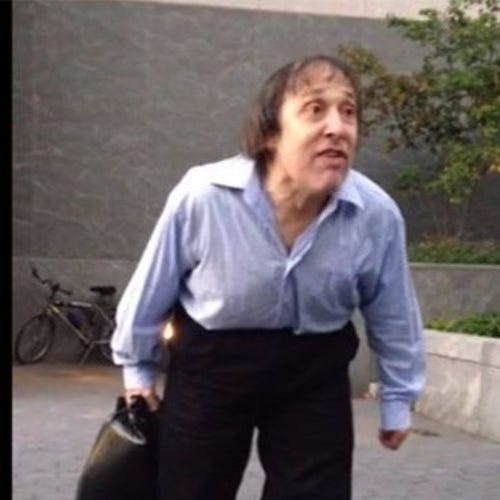
There’s a video that stays with me. A short man in a blue shirt stands on a New York sidewalk, shouting “You’re no talent!” at someone unseen. His voice cracks; his face flushes. It’s less an insult than an exorcism.
Midway through the tirade, he name drops Bob Dylan, not as an accusation, but as proof of proximity. He isn’t saying, I know talent. He’s saying, I was near it once. The name is a credential, a relic of an era when adjacency to greatness still conferred meaning.
The clip circulates online as comedy: a small, angry (old?) man yelling at an aspiring artist, but if you listen closely, there’s a wound beneath the noise. His rage isn’t directed outward; it’s collapsing inward. It’s grief masquerading as critique. He’s not furious at mediocrity. He’s furious that the world no longer rewards discernment.
In his own way, he’s performing. Not for applause, but for memory. For the possibility that someone will look at him and see a man who once cared too much. Kaprow would have recognized the impulse > a Happening stripped of artifice, life mistaken for theater. The problem is, the audience never agreed to attend.
That’s what passion looks like now: a liability, not a virtue. The more you feel, the less legible you become. Conviction reads as delusion, with emotion looking like instability. Caring openly is no longer admirable; it’s embarrassing.
We’ve trained ourselves to hide intensity behind irony, to speak in understatement, to translate sincerity into tone. Detachment has become the highest form of social intelligence — a language built to say nothing too loudly.
And so we modulate, we rehearse calm, we make our opinions sound like observations and our enthusiasm like restraint. Anything louder feels uncivilized + anything earnest = viral.
That man in the blue shirt broke the pact. He felt something in public (unfiltered, unedited, without irony), and the internet turned it into content. The tragedy isn’t that we laugh at him; it’s that we understand why.
He forgot the choreography. He said what he meant.
In another century, it might have been courage.
Now, it’s cringe.
And, of course, he scared the hoes.
What’s Left: We’re All the Hoes Now
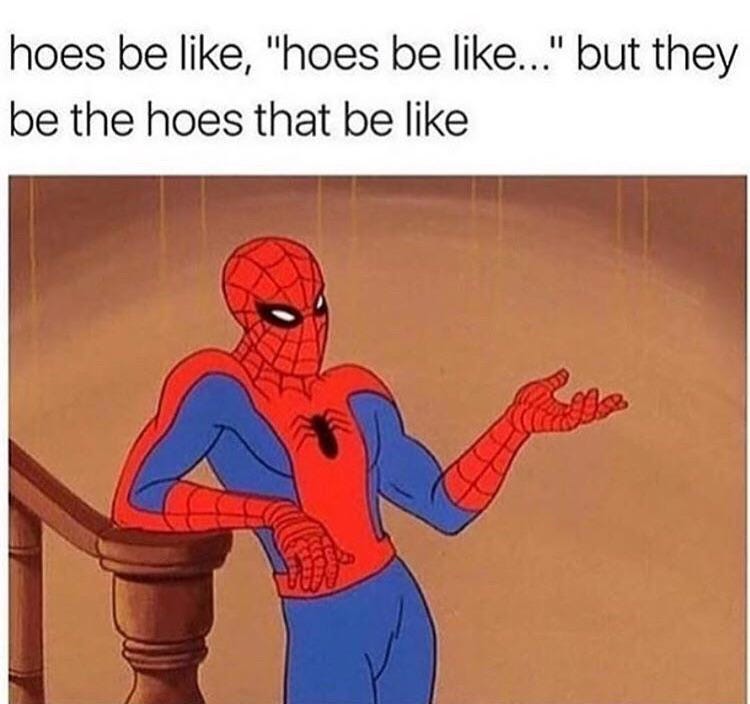
We used to call it avant-garde.
Now we just call it doing too much.
That’s what the phrase really means > you’re scaring the hoes. It’s not about women, not really. It’s about tone. About being too visible in your wanting, too unedited in your emotion, too earnest for a world that only accepts irony.
Dadaism tried to destroy meaning; The Happening tried to merge art and life. Both were searching for honesty in the wreckage of order. But we took their chaos and refined it > we branded it, optimized it, made it safe for consumption. Now every feeling has an aesthetic, and every outburst is just bad marketing.
The man in the blue shirt was the glitch. A relic of a time when emotion could still embarrass you. His fury broke the algorithmic calm. He felt something in a city built to scroll past it.
That’s the real fear; not that he was wrong, but that he was right in a way we’ve forgotten how to be.
We call it scaring the hoes, but what we mean is scaring ourselves.
Scaring away the numbness. The control. The perfectly measured cool we’ve mistaken for peace.
Every generation invents a new language for discomfort. Ours rhymes with silence.
So when someone laughs too loud, cares too hard, or breaks the rhythm of composure — we flinch. We reach for irony to clean up the spill.
Because God forbid we still feel something.
Because God forbid we’re still alive enough to scare anyone.
No neat conclusion. Just static.
Too real.....you're scaring the Hoes! :)
he truly dont miss! 🙇🏾♂️